
Choosing a web host is one of the first decisions you make when you launch a website, and it is one of the hardest to reverse. Your host affects how fast your pages load, how well you rank, how safe your data is and how much you will pay in the years ahead. Many beginners choose the lowest advertised price, only to discover a much higher bill at renewal.
In this Hostinger review for 2026, I compare Hostinger with two well known alternatives, Bluehost and SiteGround. I look at published pricing, renewal costs, the impact of speed on your business, and who each provider suits best. At the end, I explain how you can receive a discount through my referral link.
Key Takeaways
- Hostinger’s entry shared plan is advertised at $2.99 per month on a 48 month term, and it renews at roughly $10.99 per month according to a pricing guide verified in October 2026.
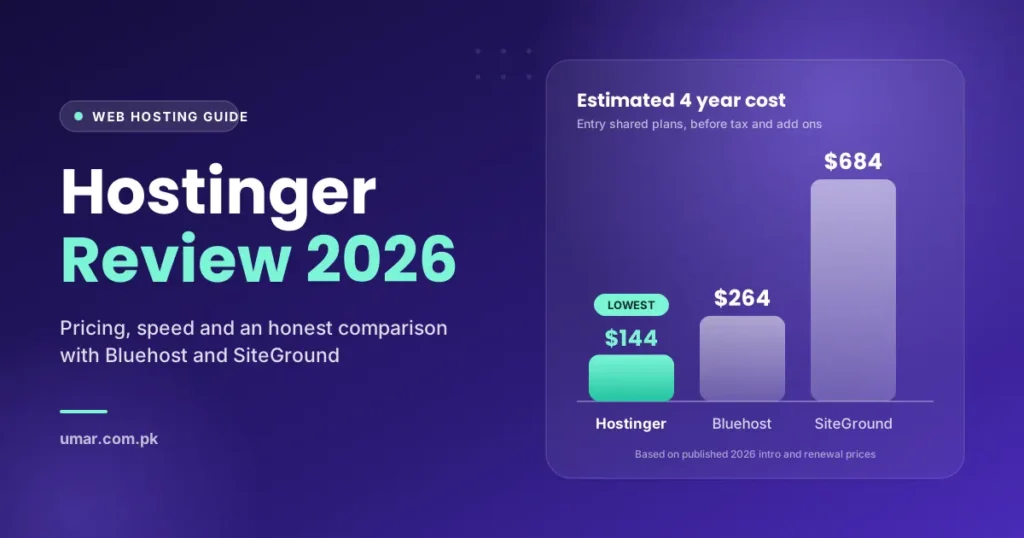
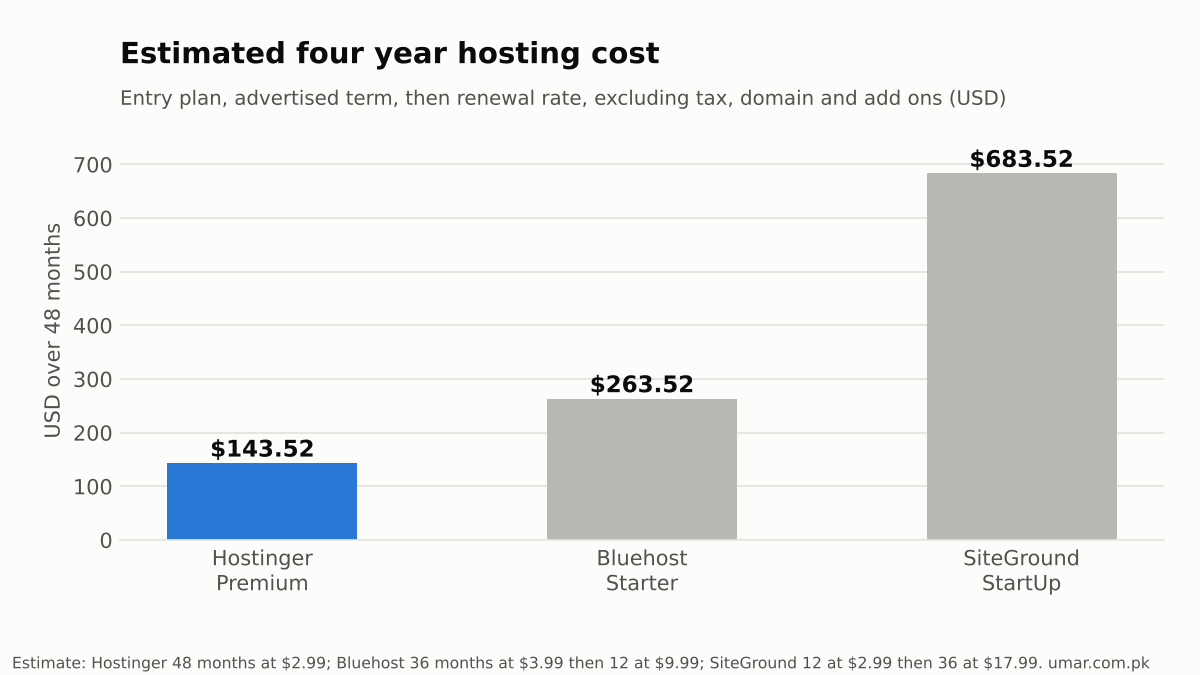
- Over four years, an entry plan on Hostinger is estimated to cost about $144, compared with about $264 on Bluehost and about $684 on SiteGround, before tax and add ons.
- Speed is a business issue. Google research reports that the chance of a visitor leaving rises by 32% when load time moves from one second to three seconds.
- Hostinger does not offer phone support, so it is better suited to people comfortable with chat support and online guides.
- New customers who use a referral link receive up to 20% off their first purchase.
Why Your Web Hosting Choice Matters More Than Ever
Web hosting is now a very large industry. Estimates differ between research firms, but one industry compilation values the global web hosting market at roughly $149.3 billion in 2025 and projects about $178.76 billion for 2026. The same compilation notes that more than 330,000 hosting companies operate worldwide. With that many options, price and marketing claims can easily hide important differences.
Your host sits underneath everything else on your website. A slow or unreliable server cannot be fixed by a beautiful design. If you build sites with a page builder, run a WordPress blog, or use forms and automation tools, the server still determines how quickly your visitors see the page. If you want to see how I approach the front end of a website, you can read my guide on JotForm customization options, which explains how design choices affect the experience of the person completing a form.
Speed Is a Revenue Issue, Not Just a Technical One
Many website owners treat speed as a technical detail. The data suggests it is closer to a revenue issue. Research compiled from Google by several industry publishers shows how quickly patience runs out online.
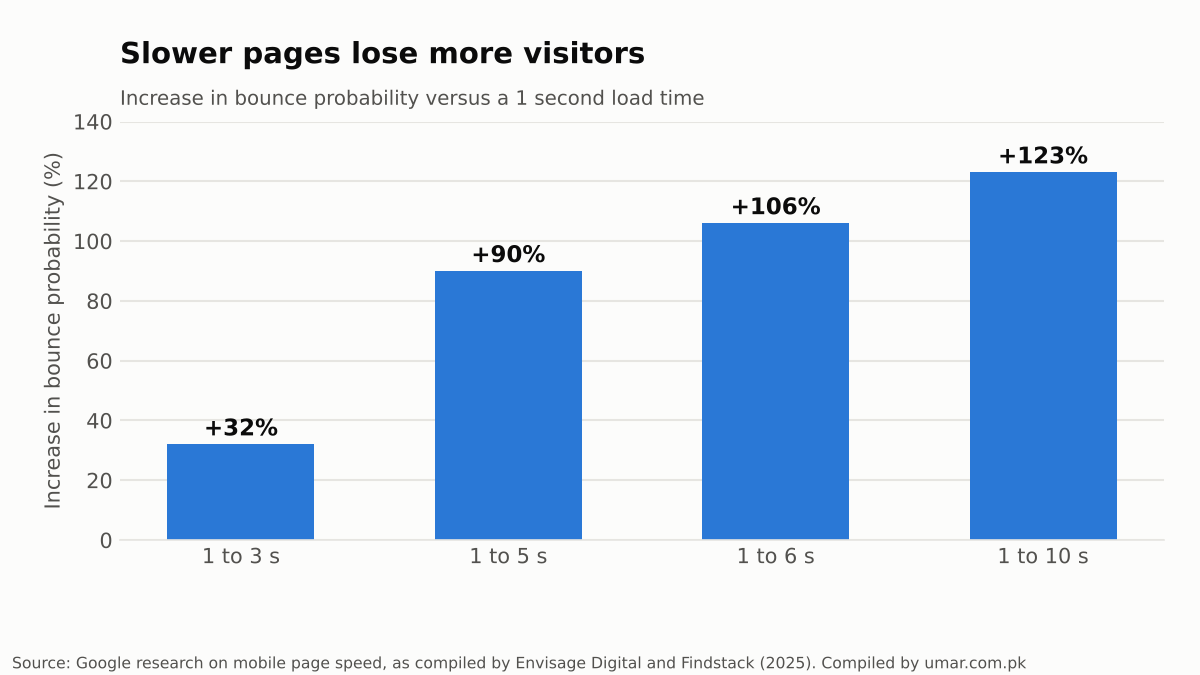
The numbers reported across these compilations are consistent:
- When load time moves from one second to three seconds, the probability of a bounce increases by 32%. From one second to five seconds it rises by 90%, and from one second to ten seconds on mobile it rises by 123%.
- Portent’s analysis of conversion data found that a page loading in one second converts at a rate roughly 2.5 to 3 times higher than a page loading in five seconds, depending on the dataset.
- Walmart reported that every one second improvement in page load time increased conversions by 2%.
- Google treats 2.5 seconds or less as a good Largest Contentful Paint score, and Core Web Vitals are a confirmed ranking factor. HTTP Archive data cited by Colorlib indicates that only about one third of websites pass all three Core Web Vitals.
The practical conclusion is simple. A faster host will not guarantee more customers, but a slow host will quietly cost you visitors, leads and search visibility. Speed also supports the other work you do on your site. For example, the automation described in my article on JotForm workflow automation only helps if people actually reach and complete your forms.
What Is Hostinger?
Hostinger is a web hosting company that offers shared hosting, WordPress hosting, cloud hosting, VPS plans and a website builder. Its shared plans are aimed at individuals, freelancers and small businesses that want a low cost start. The main shared tiers are Premium, Business and Cloud Startup, with each tier adding resources and features.
Reviewers commonly note that the Business and Cloud plans include NVMe storage and daily backups, while the Premium plan offers weekly backups. The same reviews also point out that Hostinger does not provide phone support. Hostinger also offers an AI website builder and tools aimed at WordPress users, which can reduce the time it takes to get a first site online.
Hostinger vs Bluehost vs SiteGround: Comparison Chart
The table below compares the entry level shared plan from each provider. Prices are published introductory and renewal rates from the sources listed at the end of this article. Promotional pricing changes frequently, so please confirm the final amount at checkout.
| Feature | Hostinger (Premium) | Bluehost (Starter) | SiteGround (StartUp) |
|---|---|---|---|
| Intro price per month | $2.99 | $3.99 | $2.99 |
| Term for intro price | 48 months | 36 months | 12 months |
| Renewal price per month | $10.99 | $9.99 | $17.99 |
| Estimated 4 year cost | about $144 | about $264 | about $684 |
| Phone support | No (chat and online guides) | Yes, 24/7 phone and chat | Rated stronger than Bluehost by reviewers |
| Refund window | 30 days on shared hosting | See provider policy | 30 day trial offered |
| Best suited to | Budget conscious builders and freelancers | Beginners who want phone support | Users who prioritise support and accept higher renewals |
Sources: Bloggersideas (verified October 2026), Website Builder Expert, Temperstack, PriceWorld, Smarthostfinder, Tooltester and Hostinger’s refund policy. The four year estimate excludes tax, domain fees and add ons. It assumes Hostinger on a 48 month term at $2.99, Bluehost on 36 months at $3.99 followed by 12 months at $9.99, and SiteGround on 12 months at $2.99 followed by 36 months at $17.99.
Renewal pricing: the cost most beginners overlook
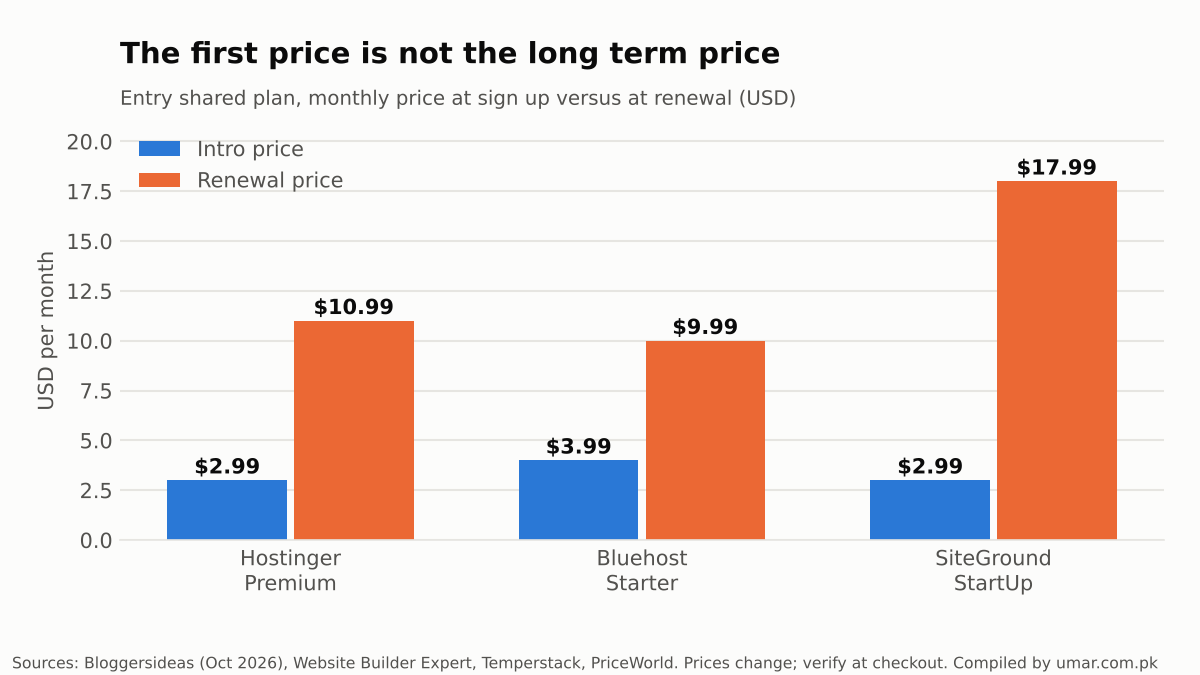
Nearly every shared host advertises a low introductory rate and then renews at a higher standard price. SiteGround’s StartUp plan is advertised at $2.99 per month and renews at $17.99, which is an increase of about 502%. Bluehost’s Starter plan moves from $3.99 to $9.99 on a 36 month term. Hostinger’s Premium plan moves from $2.99 to $10.99 after its 48 month introductory term.
The difference lies in how long the low rate lasts. Because Hostinger’s introductory price covers four years, you postpone the renewal increase for longer than with most competitors. This is the main reason the four year estimate favours Hostinger.
Where Hostinger Wins, and Where It Does Not
Strengths
- Low long term cost. The long introductory term keeps the effective monthly price low for four years.
- Modern storage on higher tiers. Business and Cloud plans include NVMe storage and daily backups, according to published reviews.
- Beginner friendly tools. A guided setup, an AI website builder and WordPress focused features shorten the path to a live site.
- A clear refund window. Hostinger’s refund policy allows shared hosting cancellation within 30 days of the transaction date, with exceptions such as domain renewals and privacy protection.
Limitations
- No phone support. If you strongly prefer to speak with someone by phone, Bluehost may suit you better.
- Renewal is still higher. Like its competitors, Hostinger renews at a standard rate, so you should budget for it before the term ends.
- Some upsells. Reviewers describe the checkout process as upsell heavy, so review the cart carefully before paying.
Which Hosting Plan Should You Choose?
The right plan depends on what you are building. A short guide:
- A personal site, portfolio or first blog: an entry shared plan is usually enough.
- A business site, several websites or a growing WooCommerce store: reviewers commonly point to the Business plan as the best balance of features and price.
- A busy site that needs more resources: consider Cloud Startup or a higher tier.
If you are unsure how much to budget for the whole project, including design, forms and automation, my article on the cost of hiring a JotForm developer in 2026 explains what typically affects pricing. You can also review my services or book a free call if you would like help connecting your website to forms, approvals and workflows.
How to Get 20% Off Hostinger With My Referral Link
Hostinger runs a referral program in which a referred customer receives a discount of up to 20% on their first purchase, and the person who referred them earns a reward of up to 20% of that purchase. The program is intended for new customers.
Under Hostinger’s referral program terms, the referral reward is earned when a friend makes a new purchase through the link. Domain services are not eligible, and a purchase that is refunded does not qualify. The terms also state that the referral program is mainly for new users and cannot be combined with other Hostinger referral programs or incentives on the same purchase.
To claim the discount:
- Open the referral link below in your browser.
- Choose the hosting plan that fits your project.
- Complete checkout as a new customer and confirm that the discount appears in your cart.
Offers and discount levels can change, so please confirm the final price in your cart before you pay.
Direct links to specific Hostinger products
If you already know what you need, the links below open a cart with the product preselected and my referral applied. Each one starts with a 24 month term, and you can change the term in the cart. Longer terms generally lower the monthly price, so the amounts shown at checkout may differ from the introductory prices quoted earlier in this article.
- Web hosting with Hostinger Mail Premium: a website hosting plan bundled with business email, 24 months.
- VPS hosting (KVM 2): a virtual private server for projects that need more power and control, 24 months.
- Docker hosting (Starter): a server set up for running containerised applications, 24 months.
- Hostinger Mail Premium: professional email on your own domain, without a hosting plan.
Please note that the referral discount applies to new customers and to eligible new purchases, as described above.
Frequently Asked Questions
Is Hostinger good for beginners?
Yes. Its setup process, AI website builder and WordPress tools are designed to help first time site owners. The main trade off is the absence of phone support.
How much does Hostinger cost?
Published guides in 2026 list its entry shared plan at about $2.99 per month on a 48 month term, with a renewal price near $10.99 per month. Prices vary by plan and billing term.
Does Hostinger offer refunds?
Shared hosting plans can be refunded if you cancel within 30 days of the transaction date. Domain renewals, privacy protection and a few other items are not refundable.
Is Hostinger better than Bluehost or SiteGround?
It depends on your priorities. Hostinger generally costs less over several years, Bluehost offers phone support, and SiteGround is often praised for support quality but carries the steepest renewal increase of the three.
Can I use the referral discount on a renewal?
No. The referral program is intended for new customers and for new purchases, and it does not apply to renewals.
Final Verdict
For most beginners, freelancers and small businesses, Hostinger offers the best balance of price and features of the three providers compared here. Its long introductory term keeps costs low for four years, and its plans cover the needs of typical WordPress sites. If phone support is essential for you, Bluehost deserves a look. If you value support above everything else and accept higher renewals, SiteGround remains a credible option.
Whatever you choose, read the renewal terms before you pay, and test your site speed after launch. If you decide to start with Hostinger, my referral link gives you a discount on your first purchase.
Sources and Credits
- Bloggersideas, Hostinger Pricing Explained (verified October 2026)
- Website Builder Expert, Hostinger and Bluehost pricing reviews (2026)
- Temperstack, PriceWorld and Tooltester pricing records for Hostinger, Bluehost and SiteGround (2026)
- Envisage Digital and Findstack, page load time statistics compiled from Google and Portent research
- Colorlib, Site Speed Statistics (March 2026), citing HTTP Archive
- Bluehost Blog and DemandSage, Web Hosting Statistics 2026
- Hostinger, Refund Policy and Referral Program Agreement (hostinger.com/legal)
- Charts: original graphics created for this article from the figures above
Disclosure: This article contains a referral link. If you buy a Hostinger plan through it, I may earn a reward at no extra cost to you, and you receive a discount on your first purchase. I host my own WordPress website on Hostinger, and I have tried to keep the comparison below fair and based on published sources.
All trademarks belong to their respective owners. Prices and terms were gathered in October 2026 and may have changed since. This article is general information and not financial advice.